Phrasal Verbs - قسمت 3

This is a list of common phrasal verbs, with meanings and examples.
A phrasal verb is a verb + a preposition or adverb; the combination creates a meaning different from the original verb.
به ادامه مطلب مراجعه کنید

This is a list of common phrasal verbs, with meanings and examples.
A phrasal verb is a verb + a preposition or adverb; the combination creates a meaning different from the original verb.
به ادامه مطلب مراجعه کنید

This is a list of common phrasal verbs, with meanings and examples.
A phrasal verb is a verb + a preposition or adverb; the combination creates a meaning different from the original verb.
به ادامه مطلب مراجعه کنید
This is a list of common phrasal verbs, with meanings and examples.
A phrasal verb is a verb + a preposition or adverb. Preposition and adverb come after the verb. The combination creates a meaning different from the original verb.
به ادامه مطلب مراجعه کنید
English Grammar
Present Continuous - "I am doing."
I + am
He, She, It + is
We, you, they + are
Structure
Positive:
subject + helping verb "be" + verb + -ing
Negative:
subject + helping verb "be" + not + verb + -ing
Questions:
Question word + helping verb 'be' + subject + verb + -ing
|
Verb = to stand |
Q - "What am I doing?" A- "You're standing." |
|
Verb = to laugh |
Q - "What's he doing?" A- "He's laughing." |
مابقی در ادامه مطلب...
Difference between I used to do and I am used to doing
Used to do
We use 'used to' for something that happened regularly in the past but no longer happens.
You can use this structure only for the past, not for the present
We also use it for something that was true but no longer is.
Be used to doing
We use 'be used to doing' to say that something is normal, not unusual.
I am used to (doing) something = it isn't strange or new for me:
get used to doing
We use 'get used to doing' to talk about the process of something becoming normal for us.
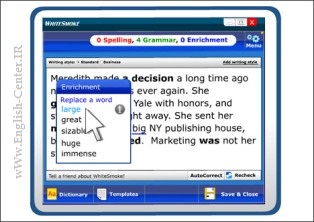
ویرایش حرفه ای متون با WhiteSmoke 2009
اگر دانشجوی کارشناسی ارشد یا دکترا هستید و یا استاد دانشگاه هستید و می خواهید مقاله ای را برای چاپ در نشریات معتبر انگلیسی ارسال کنید این نرم افزار به شما کمک می کند تا یک مقاله انگلیسی بدون مشکلات ساختاری را ارائه دهید.
شاید بگوئید نرم افزار Microsoft Word هم این کار را انجام می دهد. اما جواب این است که این نرم افزاری کاری فراتر از غلط یابی املائی و دستوری را انجام می دهد.
این نرم افزار با استفاده از هوش مصنوعی ای که در آن تعبیه شده متنی را که به آن می دهید مورد تجزیه و تحلیل قرار می دهد و آن را تصحیح می کند.
این برنامه در حقیقت استاد شما برای یادگیری مهارت Writing در انگلیسی است.
برای دانلود به ادامه مطلب مراجعه کنید
Special Singular-Plural Cases
Turning a singular noun to plural in English has very specific rules and many exceptions to these rules. This article will present you with the singular-plural rules in English.
1. Plural-Only Nouns
Some nouns only have a plural form, ending with s or without.
- The police are looking for the robbers.
- I like these pants / jeans / shorts.
- Use either scissors or nail clippers.
- Binoculars are stronger than any glasses.
متن کامل در ادامه مطلب
Prepositions of Time
Which is correct:
'my friend and me' or 'my friend and I'?
شاید این سوال برای بسیاری از زبان آموزان پیش بیاید که کدام صورت درست است, گفتن 'my friend and me' یا 'my friend and I' ؟
بستگی به این دارد که شما و دوستتان در کجای جمله قرار دارید. در گفتار محاوره معمولا از 'me' درجایی استفاده شده که شکل استاندارد گرامر به 'I' نیاز دارد, مخصوصا هنگامی که شخص دیگری نیز ذکر شده است. بعضی اوقات افراد از 'I' بجای 'me' استفاده می کنند, چون می دانند گاهی اوقات 'me' اشتباه است, اما اصل و قاعده را درک نمی کنند. خوب است بدانیم 'I' فاعل جمله می باشد درصورتی که 'me' مفعول جمله است.
اگر در درستی جمله شک دارید my friend را از جمه حذف کنید.
Me and my friend went to a party last night. اشتباه
I and my friend went to a party last night. درست
به دیگر نمونه های مشابه زیر نیز دقت کنید:
My friend and me went to a party last night. اشتباه
My friend and I went to a party last night. درست
The mayor has invited me and my husband. درست
The mayor has invited I and my husband. اشتباه
The mayor has invited my husband and me. درست
The mayor has invited my husband and I. اشتباه
از نظر گرامری نشانه بهتر بودن نیست تنها صورت I and my friend بجای my friend and I درضمن گفتن
مودبانه تری دارد.
Find out what to practise!
Test Yourself!
Hear how spoken language works, Listen and Practice!
Check 1000+ grammar hints!
A-Z index
لینک دانلود در ادامه مطلب
زبان انگليسي سال سوم متوسطه
همراه با لغات درس , توضیح گرامری , مثال , نمونه سوال و پاسخنامه
درس اول |
|
Allow = اجازه دادن |
Will & going to
Grammar Explanation:
Today we’re looking at and contrasting two ways to talk about future plans, using ‘going to’ and ‘will’.
In an earlier programme we saw that ‘going to’ can be used to talk about your intentions or decisions for the future.
...
Both
این کلمه به معنی هر دو می تواند در جمله های انگلیسی هم قبل از اسم بکار برود و هم بعد از اسم.
1) اگر قبل از اسم بکار رود به یکی از صورتهای زیر خواهد بود.
|
|
فعل + اسم + |
|
| |
|
|
مثال :
Both students study hard.
Both of us study hard.
2) اگر بعد از اسم بکار رود در یکی از حالتهای زیر خواهد بود.
|
1. اسم + both + فعل |
|
2. فعل کمکی +اسم + both فعل |
|
3. اسم + to be + both |
1. The students both study hard .
2. The students can both study hard .
3. The students are both studing hard .
نکته: both بعد از فعل کمکی و قبل از فعل اصلی می آید.
لطفا نظر بدهید![]()
Pleas Leave Comments
" Wish "
اگر بعد از wish مصدر با to بکار رود wish معنی میل داشتن و خواستن است .
مثال :
I wish to see them . ....................... . می خواهک آنها را ببینم
اما اگر بعد از wish جمله بکار رود در آن صورت wish مفهوم آرزو پیدا می کند و به معنی کاش - کاشکی است و چون فاعل آرزوی کاری را می کند که تحقیق آن یا انجام آن حتمی و یقینی نیست wish در این حالت جزء غیر واقعی بحساب می آید بدین صورت که :
1- اگر آرزو برای زمان آینده باشد جمله بعد از wish با would بیان می شود. مثلا :
I wish they would call me tomorrow .
2- اگر آرزو برای زمان حال باشد , فعل جمله بعد , بعد از wish در زمان گذشته ساده خواهد بود . مثلا :
I wish they called me now .
3- اگر آرزو برای زمان گذشته باشد فعل جمله بعد از wish با گذشته کامل بیان می شود. مثلا :
I wish they had called me yesterday .
نکته : اگر قید زمان در جمله وجود نداشته باشد برای تعیین شکل فعل جمله بعد از wish احتیاج به جمله نشانه است.
لطفا نظر بدهید![]()
Pleas Leave Comments
Unless
مگر اینکه
کلمه unless می تواند در جمله های شرطی ( if clause ) جای if و not بکار رود .
مثلا بجای اینکه گفته شود :
تو موفق نمی شوی اگر کوشش نکنی.
You won't succeed if you don't try .
می توان جمله شرطی به صورت زیر نیز بیان کرد .
موفق نمی شوی مگر اینکه کوشش کنی .
You won't succeed unless you try .
البته Unless مثل if می تواند وسط دو جمله یا ابتدای جمله اول قرار گیرد .
مثال :
Unless you try , you won't succeed .
تذکر :
If not = unless
If = unless not
مثال :
Unless you don't try , you will succeed = Unless you try , you won't succeed .
" Used to "
دلالت بر عملی می کند که در گذشته به صورت عادت و تکرار انجام می شده که در فارسی می توان آن را به ( سابقا - قدیمها - اونروزها ) ترجمه کنیم و برای سوالی و منفی کردن آن از did استفاده می شود .
مثال :
او سابقا زیاد سیگار می کشید. ------------- He used to smoke a lot .
آیا تو سابقا اینجا درس می خواندی؟ ------------- Did you use to study here?
من قدیمها او را زیاد نمی دیدم. ------------- I didn't use to see him very often.
Used to : علاوه بر عادت و تکرار بیانگر وضعیت و موقعیت در گذشته می باشد.
مثال :
او سابقا ناظم مدرسه بود اما حالا دیگه نیست. ------------- He used to be the dean of high school but he isn't now ,again.
توجه : به جای used to می توان would به کار برد فقط زمانی که عادت و تکرار مطرح باشد .
تذکر :
فعل ing / اسم / ضمیر + to be used to یا to get used to
To be used to به مفهوم ( عادت داشتن به ) می باشد .
To get used to به معنای ( عادت کردن به ) می باشد .
لطفا نظر بدهید![]()
Pleas Leave Comments
Grammar
between & among
Between and among are both prepositions, and they are usually followed by nouns. Let's look at
between first.
Between is usually followed by 2 nouns, like this:
…between the mountains and the sea
The nouns can be single, plural or uncountable. The important thing is that between identifies them as
Capitalization Rules
قواعد نوشتن با حروف بزرگ

There are many times when a word or words must be capitalized. Here are ten capitalization rules you should know and use. An example is shown for each rule.
تعدادی زمان وجود دارند هنگامی که یک کلمه یا کلمات بایستی با حروف بزرگ نوشته شوند . در اینجا ده قاعده نوشتن با حروف بزرگ وجود دارند که شما باید بدانید و استفاده کنید . و یک مثال برای هر قاعده ارائه داده شده است .
با حروف بزرگ نوشتن اولین کلمه یک جمله.
It is important to know when a word must be capitalized.
Kinds of Sentences
انواع جملات
( Simple, Compound, and Complex )
ساده , مرکب , پیچیده
1. Simple Sentences
A simple sentence has the most basic elements that make it a sentence: a subject, a verb, and a completed thought.
Examples of simple sentences include the following:
Joe waited for the train.
"Joe" = subject, "waited" = verb
KINDS OF ADVERBS
انواع قید
Adverbs of Manner
قید وصفی
Adverbs of manner tell us how something happens. They are usually placed after the main verb or after the object.
قیدهای وصفی درباره ی چگونگی اتفاق افتادن چیزی به ما می گویند. آنها معمولا بعد از فعل اصلی یا بعد از مفعول می آیند.
Examples:
BE CAREFUL! The adverb should not be put between the verb and the object:
مراقب باشید! قید نباید بین فعل و مفعول قرار گیرد.
ضمیمه های سوالی
A tag question is a special construction in English. It is a statement followed by a mini-question. The whole sentence is a "tag question", and the mini-question at the end is called a "question tag".
We use tag questions at the end of statements to ask for confirmation. They mean something like: "Am I right?" or "Do you agree?" They are very common in English.
The basic structure is:
|
+ |
- |
|
Snow is white, |
isn't it? |
|
- |
+ |
|
You don't like me, |
do you? |
Kinds of Noun
انواع اسم
Explanation:
Words used to name people , places , things , or ideas are nouns.
اسم محسوس - Concrete Noun
A person , place , or thing that you can become aware of through one or more of your five senses is concrete.
Examples:
honey , water , music , pillows , bed , fish
|
SOME |
We use "some" in positive sentences. We use some for both countable and uncountable nouns. .اين كلمه را در جملات مثبت استفاده می کنیم some و برای هردوی اسم های قابل شمارش وغیر قابل شمارش استفاده می کنیم. Example: I have some friends.
|
|
ANY |
We use "any" in negative sentences or questions. We use any for both countable and uncountable nouns. any این کلمه را در جملات منفی یا سؤالی استفاده می کنیم. و برای هردوی اسم های قابل شمارش وغیر قابل شمارش استفاده می کنیم. Example: Do you have any cheese? - He doesn't have any friends in Chicago. |
همراه با توضیح فارسی
| We use "here" for something which is near to us. Example: Here is the pencil in my hand. | We use "there" for something which is far from us. Example: There is the pen next to the lamp. |
| We use "this" for one object (singular) which is here (near to us). Example: This is a book in my hand. | We use "that" for one object (singular) which is there. Example: That is his car over there. |
| We use "these" for more than one object (plural) which are here (near to us). Example: These are my friends next to me. | We use "those" for more than one object (plural) which are there. Example: Those are his toys over there. |
| We use "there" for one object (singular) which exists - or "is" (near to us). Example: There is (There's) a table next to the window. | We use "there" for more than one object (plural) which exist - or "are". Example: There are (There're) many of my friends at the party tonight. |
1. Does Tense = Time ?
Not Always
2. Situation and Time Words determine Time
3. Time chooses Tense (not the other way around)
4. Present Time (Now)
Future progressive tense is used to indicate action which will be taking place at some time in the future.
For example,
I will be singing at Symphony Hall next month.
We’ll be leaving next Monday.
When you arrive, I’ll be cooking dinner.
In English the Future Time is expressed in a number of ways. The most common are with will and be going to. See examples from the following sentences.
I will finish my homework in an hour.
I’m going to finish my homework in an hour.
She’s going to eat a whole watermelon.
Actually, we’re going to eat a whole watermelon together.
Past perfect tense is used to indicate that one action occurred before another action in the past. In other words, past perfect tense indicates the first of the two actions.*
For example,
When I woke up this morning, my roommate had left already.
After I had eaten my dinner, I went to see a movie.
Before I arrived at the theater, the movie had already begun.
The present perfect progressive expresses the meaning “until now” and makes the connection between the past and present. Since it is progressive, it usually connotes an idea of continuity. It is often used with prepositional phrases: for + amount of time and since + point in time.
I have been living in Minneapolis since 1999.
I have been living in Minneapolis for three years.
1. To indicate something that has happened at an indefinite time in the past.
I have seen that movie already.
She has left for California.
They have not eaten their dinner yet.
|
Past progressive tense is used to indicate that an action was in progress when another action occurred in the past. Past progressive (was/were + Ving) refers to the action in progress, and simple past tense refers to the "interrupting" action.
The telephone rang while I was eating dinner. When the telephone rang, I was eating dinner. I was eating dinner when the telephone rang. |
Explanation1. The simple past tense is expressed with the past form of the verb and nothing else.
b. completed action c. past status |
| The present progressive tense takes the form be + V ing.
The form of “be” is determined by the subject of the sentence.
She is listening. They are sleeping. I am going home. |
1A. Explanation
|